Mercedes baffled by 'rubbish' high-speed pace as Norris and McLaren expose Zandvoort weakness
Despite George Russell taking sprint pole and victory at Zandvoort, Mercedes fell behind McLaren in the Dutch Grand Prix and cannot explain why its pace through high-speed corners collapsed — or why its two drivers experienced opposite handling problems.
2 min read
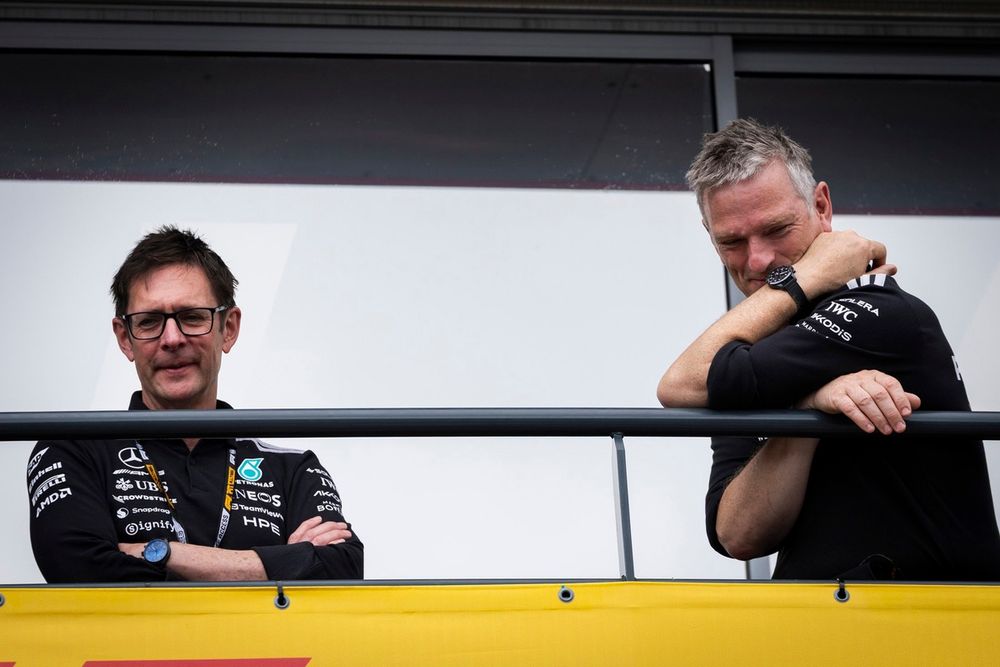
Mercedes left Zandvoort with a 2-3 finish in the Dutch Grand Prix but without answers to a more troubling question: why the team was so poor through the circuit’s high-speed corners, and why its two drivers experienced completely different handling characteristics across their stints.
Trackside engineering director Andrew Shovlin described the W16’s performance through Turns 7, 8 and 9 as “rubbish”, admitting the team does not yet fully understand what caused the drop-off. Lando Norris took pole and won the grand prix for McLaren, while Kimi Antonelli finished second ahead of team-mate George Russell — a result that extended Antonelli’s championship lead to 59 points.
The confusion is compounded by the contrast with the earlier part of the weekend. Russell had taken sprint pole and won the sprint race, giving Mercedes every reason to expect a competitive Sunday. “We’ve got a few things on the performance side to try and dig into,” Shovlin said on Mercedes’ Nu Silver Arrows Radio Show. “We’re going to be getting on with that this week and see what we learn.”
Shovlin was specific about where the car lost time. “There were a few corners where we were pretty rubbish, like that combination of [Turns] 7, 8, 9,” he said. “You could see [it in] the faster-speed [curves]. And it also gives the tyres on the left-hand side of the car a tough time. And we don’t really understand yet fully what’s causing that. We’ve got some ideas, but that’s not a problem that we’ve suffered with so far this year.”
What deepened Mercedes’ uncertainty was that minimal setup changes were made between the sprint race and the grand prix, and the team was not adjusting electronic settings or aerodynamic angles during the race itself. Yet the two drivers reported starkly different experiences.
“George’s first stint was a bit lacklustre compared to his later ones,” Shovlin explained. “And then with Kimi, first stint was good, and then dropped a bit on the second, dropped a bit more on the third. It wasn’t like we were playing around with electronic settings or up and down on flap angles. And for him, the balance of the car was quite different stint on stint.”
The divergence in driver feedback added another layer of complexity. By the end of the race, Russell was reporting an understeery car while Antonelli was dealing with oversteer — an unusual split that leaves the engineering team with multiple variables to untangle before the next round.
Shovlin acknowledged that some pace variation across tyre compounds and life cycles is expected, but the scale and inconsistency of what Mercedes observed at Zandvoort went beyond normal parameters. With several upcoming circuits featuring sustained high-speed corners in a single direction, finding a clear explanation quickly will be a priority.
Read also
-
 Formula 1 ·
Vowles admits Williams still paying for winter mistakes as team launches overhaul ahead of 2026
-
 Formula 1 ·
Red Bull's Lawson swap at Dutch GP exposes sister-team advantage, says Schiff
-
 Formula 1 ·
Ferrari brings upgraded engine and new rear wing to Italian GP in title fightback
-
 Formula 1 ·
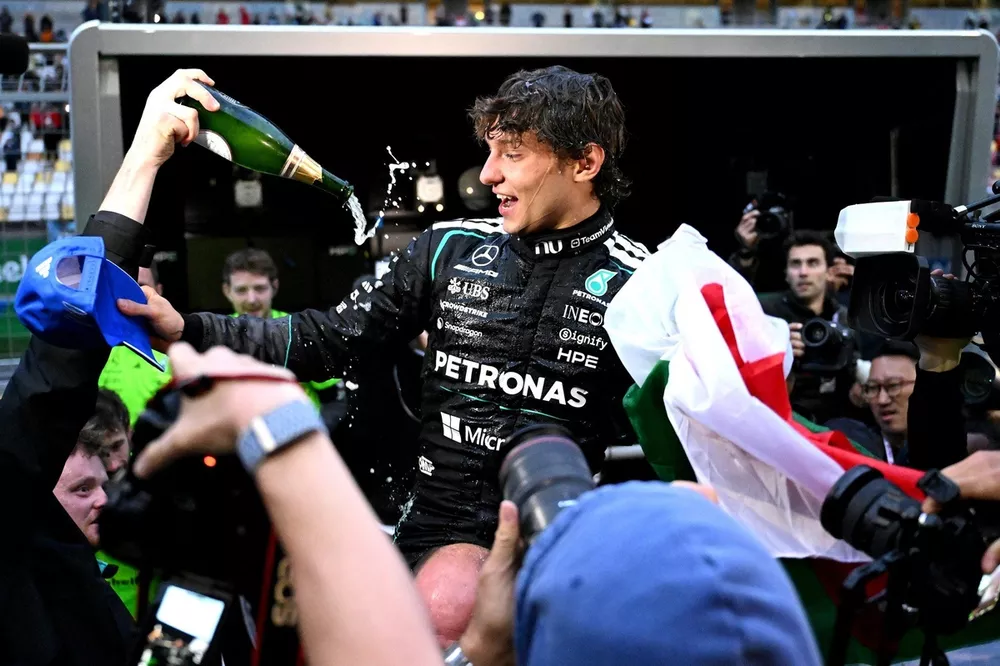
Antonelli reveals Mercedes gave him the original Chinese GP trophy after maiden F1 win
-
 Formula 1 ·
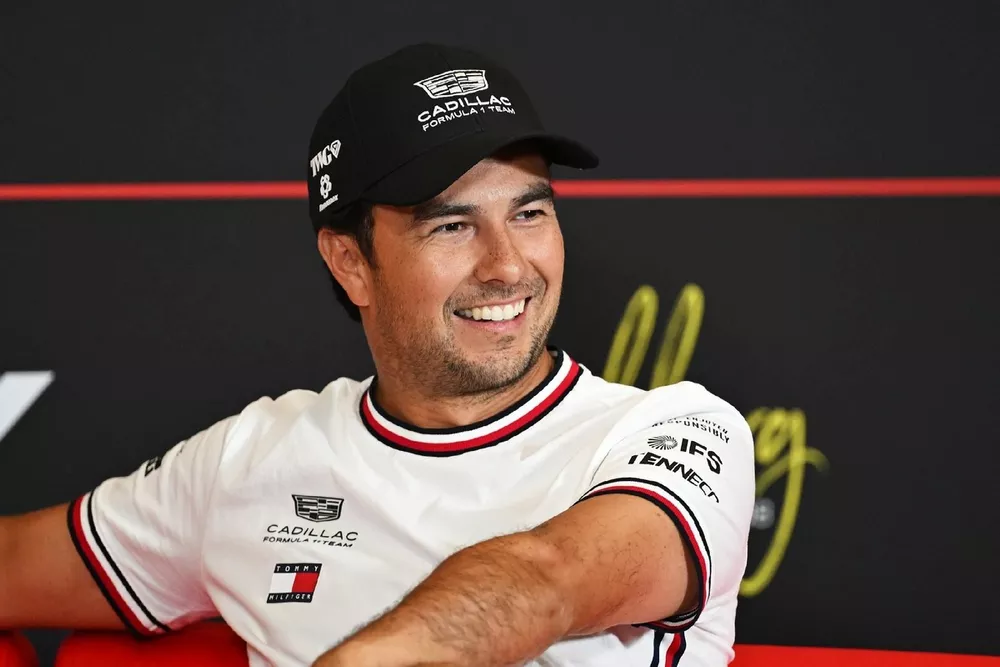
Perez targets three more F1 years as Cadillac project reignites his drive
-
 Formula 1 ·
Ukraine files FIA ethics complaint after Russian motorsport ban is lifted