FIA freezes current F1 engines from mid-2028 to ease V8 transition costs
The FIA will halt development of Formula 1's current hybrid V6 power units from the 13th race of the 2028 season, with only reliability updates permitted thereafter. Dyno restrictions on the incoming 2030 V8 also apply to prevent manufacturers running two simultaneous development programmes.
2 min read
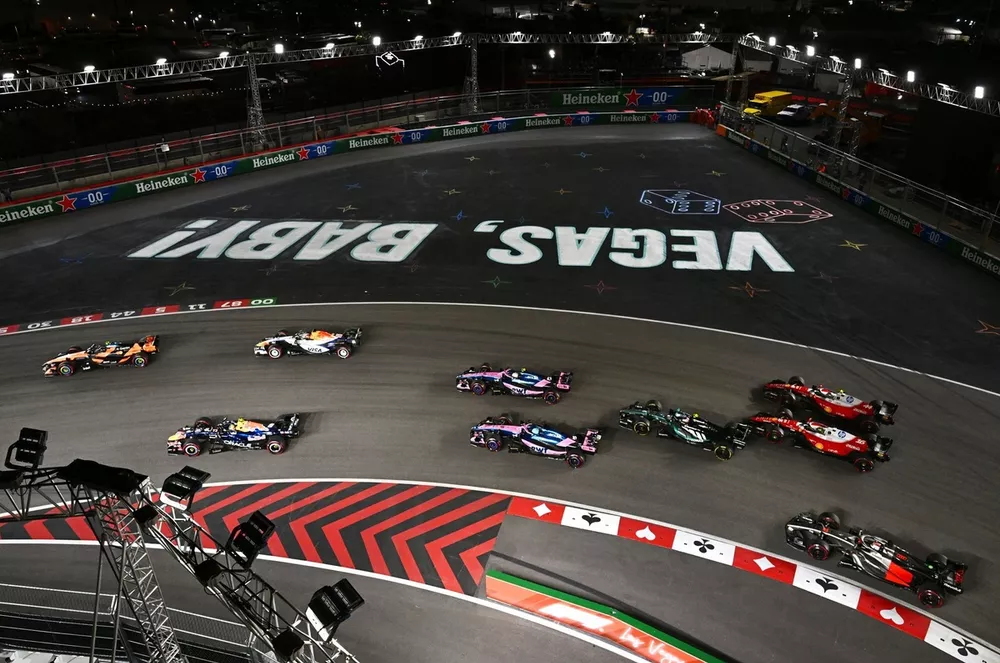
The FIA has confirmed that development of Formula 1’s current hybrid V6 power units will be frozen from the 13th race of the 2028 season, with single-seater director Nikolas Tombazis outlining the framework in detail. From that point, manufacturers may only carry out reliability updates — all performance development will be prohibited.
The freeze is designed to stop teams from running two parallel engine programmes at once, which the governing body warns would drive costs to unsustainable levels and create a development race that spirals out of control. It also aims to prevent a scenario in which a manufacturer still significantly behind on the current generation — such as Honda — is disadvantaged when the cut-off arrives.
Alongside the freeze on current units, the FIA has imposed staged restrictions on early work for the incoming 2.1-litre turbocharged V8, which is set to enter the sport in 2030. Manufacturers will not be permitted to conduct dyno work with a single cylinder before 1 October 2027, and full power-unit dyno running will be banned until 1 July 2028 — a date that roughly aligns with the 13th race of that season and the simultaneous freeze on the V6.
“What we want to avoid for cost reasons is that they have two parallel programs,” Tombazis said. “We need to consider this whole topic in relation to our intention and what we’ve discussed with the PU manufacturers, so to freeze the current generation of engines from a certain point onwards. That will be mid-2028.”
One notable exemption applies to newcomers: General Motors, which is entering the sport with its Cadillac power unit, will be permitted to carry out simulation work earlier than the established manufacturers, as the restrictions are not binding on new entrants.
Tombazis also acknowledged that the FIA is behind schedule on the related ADUO (Allocated Development Units Override) framework, which governs how manufacturers can spend their development tokens. He confirmed no final decision has been reached on that element, though it is closely linked to the broader engine-freeze policy.
“We’ve been concentrating on the PU framework and, frankly speaking, we are a bit late on the ADUO side,” he said.
The measures collectively reflect the FIA’s attempt to manage the cost and competitive implications of one of the sport’s most significant regulatory transitions in recent years, as F1 moves away from its complex hybrid architecture toward a simpler, louder V8 formula for the second half of the decade.
Read also
-
 Formula 1 ·
World champion Antonelli leads Russell as Mercedes dominate Qatar GP opening practice
-
 Formula 1 ·
World champion Antonelli leads Mercedes 1-2 in Qatar GP opening practice
-
 Formula 1 ·
Sainz proposes corner-exit boost to replace DRS in F1's 2030 regulations
-
 Formula 1 ·
Honda finds no fault after Alonso's 'broken engine' retirement in Las Vegas
-
 Formula 1 ·
FIA uses Kahoot! quiz to draw Hamilton and drivers into stewarding debate at annual summit
-
 Formula 1 ·
Wolff confirms Antonelli deserves a pay rise after F1 title on €4m salary

 Northern Ireland W
