FIA considers reviving DRS alongside push-to-pass for F1's 2030 V8 era
The FIA is exploring a combination of DRS and a push-to-pass system to facilitate overtaking under Formula 1's next power unit regulations, which introduce a 2.1-litre turbocharged V8 from 2030. Straight mode zones will be scrapped entirely.
2 min read
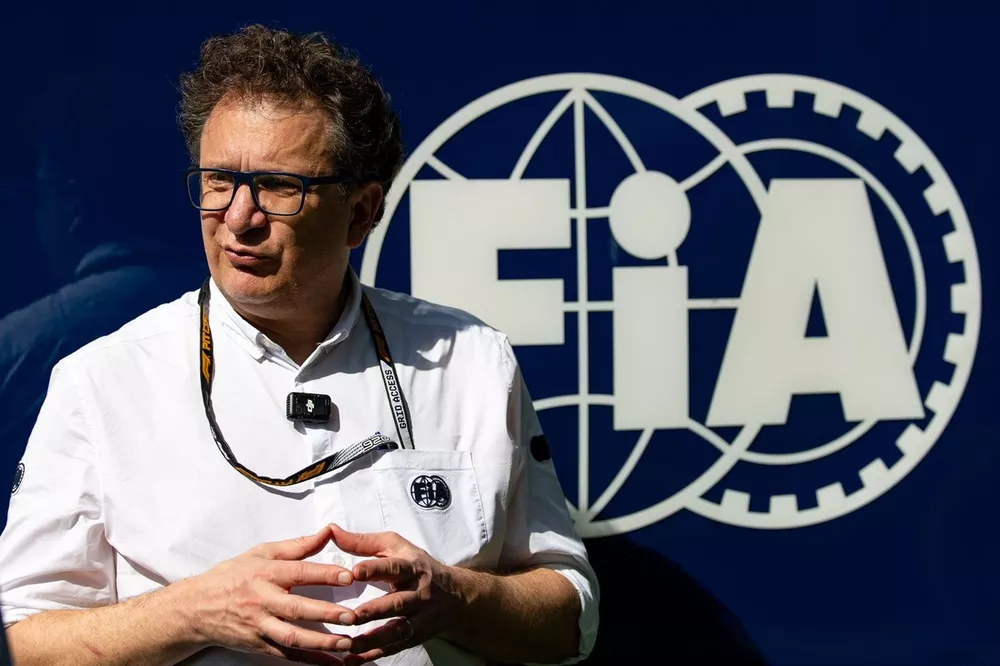
The FIA is actively investigating a return of DRS as an overtaking aid for Formula 1’s 2030 regulations, potentially combining it with a push-to-pass system under the sport’s incoming 2.1-litre turbocharged V8 framework.
FIA single-seater director Nikolas Tombazis confirmed that straight mode zones — introduced alongside active aerodynamics for the 2026 rules cycle — will not carry over into the next era. With the electrical component of the new power unit significantly reduced in size and complexity compared to current hybrid systems, the governing body is rethinking how overtaking aids will work from the ground up.
“The electrical power in race conditions will definitely be more focused on push-to-pass and less on the energy recovery,” Tombazis said. “Because the electrical part will be so much smaller in dimensions compared to the current engines, it means that all the regulations that relate to the energy usage will be either eliminated or hugely simplified.”
Simulations are currently underway to determine the precise shape of the push-to-pass system — whether it mirrors IndyCar’s fixed allocation of seconds per race or takes a different form — and whether DRS needs to be layered on top to guarantee close racing.
“If we need to have an addition of DRS to go together with some electrical part, then we will be more than happy to do that,” Tombazis added. “We won’t need to have SM mode zones anymore under the next regulations, and therefore we would retain the option to have a more DRS-like device to complement the electrical part to make sure that we have the right level of close racing.”
DRS was phased out for 2026 when the introduction of active aerodynamics — allowing drivers to open both front and rear wings in designated zones — made the drag-reduction system redundant. The FIA replaced it with overtake mode, an electrical boost mechanism that Tombazis acknowledged was largely a product of the 2026 ruleset’s complexity rather than a deliberate long-term design choice.
The broader 2030 power unit framework was announced last week. Beyond the overtaking question, many regulatory details are still being finalised and are expected to be resolved over the coming months.
Read also
-
 Formula 1 ·
Russell softens on Verstappen's 2024 'wall' threat two years on at Qatar return
-
 Formula 1 ·
Russell contrasts Hamilton's dignity with Verstappen's 'karma' jab after Las Vegas feud reignites
-
 Formula 1 ·
Pirelli weighs cutting Qatar tyre limit after 100% wear recorded in just 15 laps
-
 Formula 1 ·
Hankook joins Bridgestone in challenging Pirelli for post-2028 F1 tyre contract
-
 Formula 1 ·
Russell hints Wolff's private view of Verstappen is sharper than his diplomatic public stance
-
 Formula 1 ·
Leclerc admits Ferrari are 'very, very slow' after floor damage mars Qatar GP practice

 Chinese Taipei W