FIA confirms Red Bull-Ford leads F1 engine rankings after second ADUO assessment
The FIA's second ADUO power unit evaluation, covering races from Australia to Hungary, confirms Red Bull-Ford holds the benchmark engine in Formula 1. Mercedes sits 2–4% behind, while Audi, Ferrari and Honda trail by more than 4%, though no new homologations were awarded this cycle.
1 min read
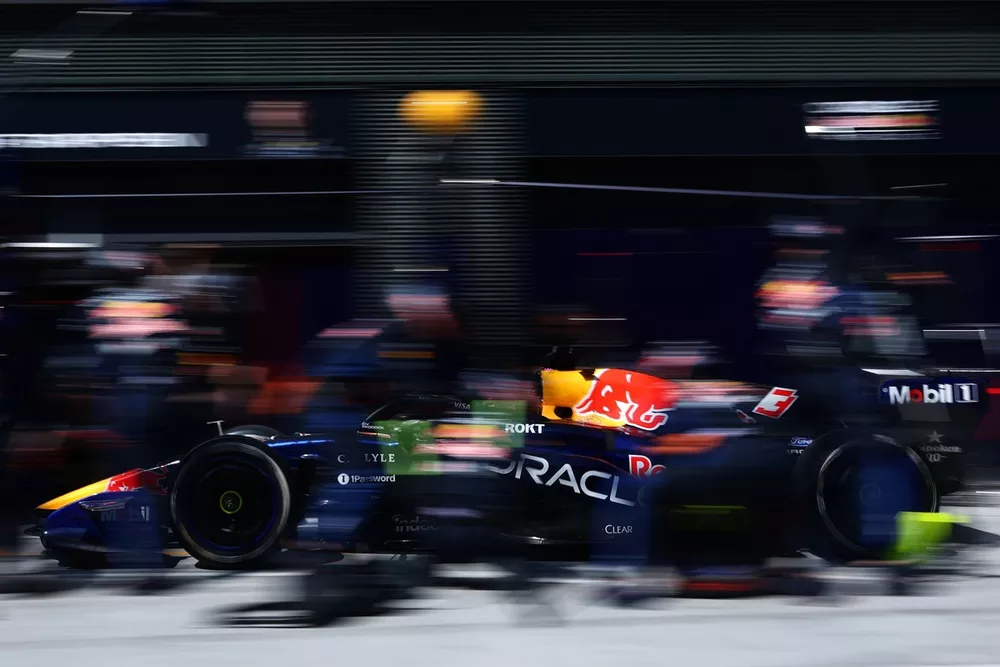
The FIA has confirmed Red Bull-Ford retains the most powerful engine in Formula 1 following the completion of its second Additional Upgrades and Opportunities (ADUO) assessment, covering the season-opening Australian Grand Prix through to the Hungarian Grand Prix.
Mercedes sits 2% to 4% behind the Red Bull-Ford benchmark on power output, while Audi, Ferrari and Honda are each more than 4% adrift. Honda’s revised powertrain, introduced at the Dutch Grand Prix, was not included in this assessment period.
Unlike the first ADUO review — which resulted in Mercedes receiving one additional homologation for 2026 and 2027, and Audi, Ferrari and Honda each receiving two for both seasons — no new homologations have been awarded following this second evaluation. Those earlier homologations, which had not been publicly announced at the time, consist of additional cost cap allowance and further dyno testing rights.
Nikolas Tombazis, FIA director of single-seater, defended the rigour of the process. “The FIA has undertaken thorough and exhaustive analysis as part of our ADUO review process,” he said. “With the release of the findings of period two, we are confident that, based on the quality of the data, its analysis is incredibly robust, giving us a high level of confidence in our findings. We also have to respect the confidentiality and intellectual property of the teams and their power unit manufacturers in disseminating any details from the findings.”
Tombazis acknowledged that the framework, now in its first year of operation, may be refined going forward. “This is the first year of ADUO so naturally there are areas which we may evolve over time, in discussion with all the PU manufacturers,” he added.
The ADUO system was introduced to allow manufacturers whose power units fall short of the benchmark a structured pathway to close the performance gap through additional development resources. The absence of new homologations in this second cycle suggests the FIA determined the existing gap did not meet the threshold required to trigger further intervention.
Read also
-
 Formula 1 ·
Hadjar's Dutch GP withdrawal shows confidence, not weakness, says former Red Bull mechanic
-
 Formula 1 ·
Ferrari's upgraded engines ready as team weighs Monza debut for Leclerc and Hamilton
-
 Formula 1 ·
FIA confirms Red Bull-Ford holds F1's most powerful engine after ADUO Period 2 review
-
 Formula 1 ·
Real Madrid becomes official partner of Madrid Formula 1 Grand Prix after 45 years away
-
 Formula 1 ·
Imola set to replace Qatar or Abu Dhabi on 2026 F1 calendar amid Middle East unrest
-
 Formula 1 ·
Mercedes dig into data after Antonelli's W17 balance woes cost him at Zandvoort