Eliminated by Portugal, Croatia may have played Modric's final international match
Beaten 2-1 by Portugal in the World Cup round of 16, Croatia could have played the last international match of 40-year-old Luka Modric, who has 202 caps to his name.
1 min read
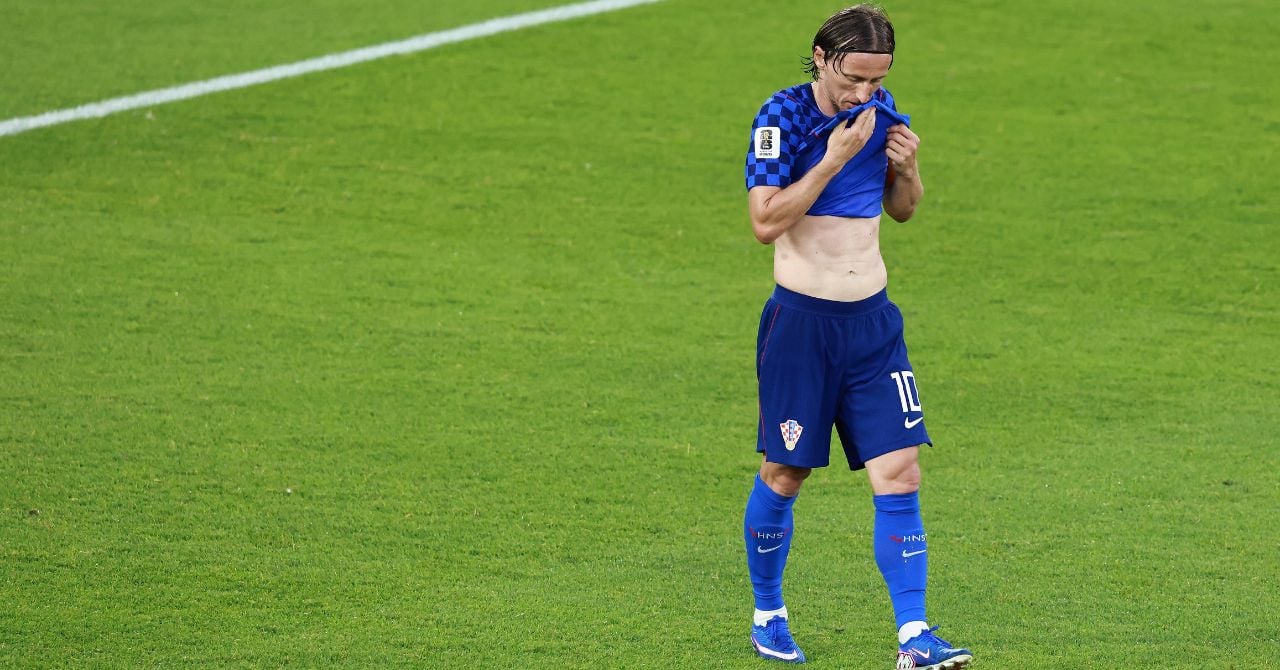
Croatia was eliminated from the World Cup in the round of 16, losing 2-1 to Cristiano Ronaldo’s Portugal. The Vatreni thought they had snatched an equalizer in the dying seconds, but the goal was ruled out for offside, making the defeat even more bitter.
This match could mark the end of Luka Modric’s international career. At least that’s what Katia Aveiro, Cristiano Ronaldo’s sister, suggested on the sidelines of the match. “Confident and happy, because you have to savour these moments. It’s the final lap for two players, one for Croatia and one for Portugal. The most important thing is to enjoy these twenty years lived, these victories, this journey,” she told the press.
She was then more explicit: “Based on the information I have, they can say goodbye. Enjoy it while it lasts. I believe these are their farewells.” In recent weeks, several media outlets had already raised the possibility of the 40-year-old midfielder ending his international career after this World Cup.
Modric himself has never officially confirmed his international retirement, but this 2026 World Cup was already seen as his probable last major appointment with the national team. An international since 2006, 2018 Ballon d’Or winner, he has 202 caps and 29 goals with the Vatreni, and has played in five World Cups wearing the Croatian shirt. If this match against Portugal was indeed the last, a major chapter of Croatian football closes.
Read also
-
 Football ·
Mbappé's captaincy directly triggered Griezmann's international retirement
-
 Football ·
FFF preparing Hall of Fame to honour Deschamps in 2027
-
 Football ·
McTominay demands £7.7m-a-year deal as Napoli contract talks stall
-
 Football ·
McTominay calls £25.7m Man Utd exit a 'huge decision' after Serie A Player of the Year honour
-
 Football ·
Ngumoha draws Rooney and Bellingham comparisons after England's third-youngest competitive debut
-
 Football ·
Paul Dickov breaks silence on Man City guilty verdicts: 'Got to believe'
 Denmark U19