Audi reveals new Hinwil campus plan to build long-term F1 infrastructure by 2030
Audi's Formula 1 team has unveiled plans for a new campus near its existing Hinwil factory in Switzerland, with initial elements operational by summer 2026 and full completion targeted for 2030. The existing Wildbachstrasse site will be redeveloped, retaining its wind tunnel.
2 min read
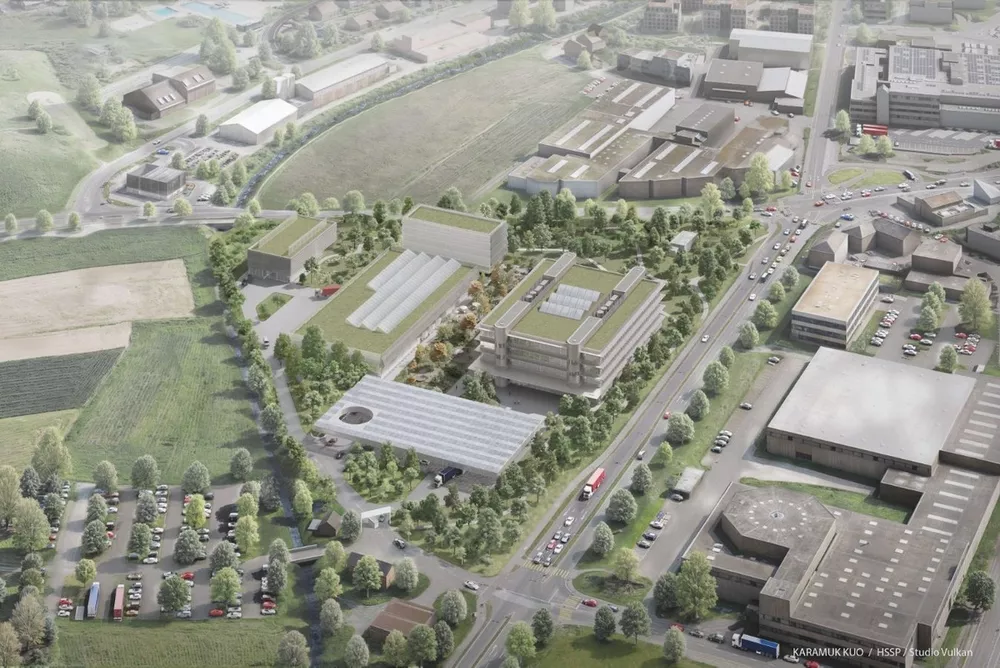
Audi’s Formula 1 team has announced plans for a purpose-built campus adjacent to its historic Hinwil base in Switzerland, with the first elements set to open in summer 2026 and the full development due for completion in 2030.
The new facility on Zurichstrasse will serve as the team’s primary operational hub, designed to consolidate and modernise infrastructure that has required significant investment since Audi began acquiring the former Sauber operation. The existing Wildbachstrasse site — home to the team since Peter Sauber founded his eponymous outfit in 1970 — will be redeveloped, though its wind tunnel will be retained as a manufacturing and aerodynamic testing base.
Audi’s engine development facility in Neuberg and its UK satellite office in Bicester will both remain in place. The Bicester base was established specifically to recruit experienced personnel unwilling or unable to relocate to Switzerland, and that strategy will continue.
Team principal and CEO Mattia Binotto framed the campus as central to Audi’s competitive ambitions. “The campus will play an important role in helping us attract and retain world-class talent while providing the foundations required to achieve our long-term ambitions,” he said. “Building a successful Formula 1 team is ultimately about people. The best engineers, designers, mechanics and specialists want to work in an environment that allows them to collaborate, innovate and perform at their highest level.”
Binotto also highlighted the rarity of building a team facility from scratch. “We are not simply moving into an existing facility; we are creating a home designed around our people, our culture and our ambitions. Opportunities like this are rare in modern Formula 1.”
The Hinwil site carries considerable history. Sauber ran Mercedes’ sportscar programme in the 1980s before entering F1 in 1993. BMW purchased the team in 2005 and sold it back to Sauber in 2009. Audi then acquired a stake in stages, taking full control in January 2025. Since BMW’s departure, the team had operated on a comparatively modest budget, leaving both the CFD cluster and wind tunnel in need of substantial modernisation — the latter famously funded by compensation received from Mercedes when Kimi Räikkönen was released from his Sauber contract to join McLaren in 2002.
The campus project represents Audi’s most concrete signal yet of its commitment to competing at the front of Formula 1 over the coming decade.
Read also
-
 Formula 1 ·
Leclerc deletes social media to escape 'silly' Vasseur rumours threatening Ferrari's serenity
-
 Formula 1 ·
Hamilton backs Vasseur as 'the guy' to lead Ferrari amid Horner replacement rumours
-
 Formula 1 ·
Hamilton backs Vasseur as Ferrari boss he needs amid Horner speculation
-
 Formula 1 ·
Lindblad handed back-of-grid penalty for Malaysian GP after Racing Bulls exceed power unit allocation
-
 Formula 1 ·
Verstappen to race GT3 at Portimao against Valentino Rossi between F1 triple-headers
-
 Formula 1 ·
Verstappen adds GT3 Portimao race to F1 schedule, setting up Rossi showdown

 Maldives