Alessandrini describes the hell of Bielsa's training sessions at OM: "We were machines"
A former attacking midfielder who played for Olympique de Marseille between 2014 and 2017, Romain Alessandrini paints an unsparing portrait of Marcelo Bielsa: tactically impressive, but inhumane with much of his squad.
1 min read
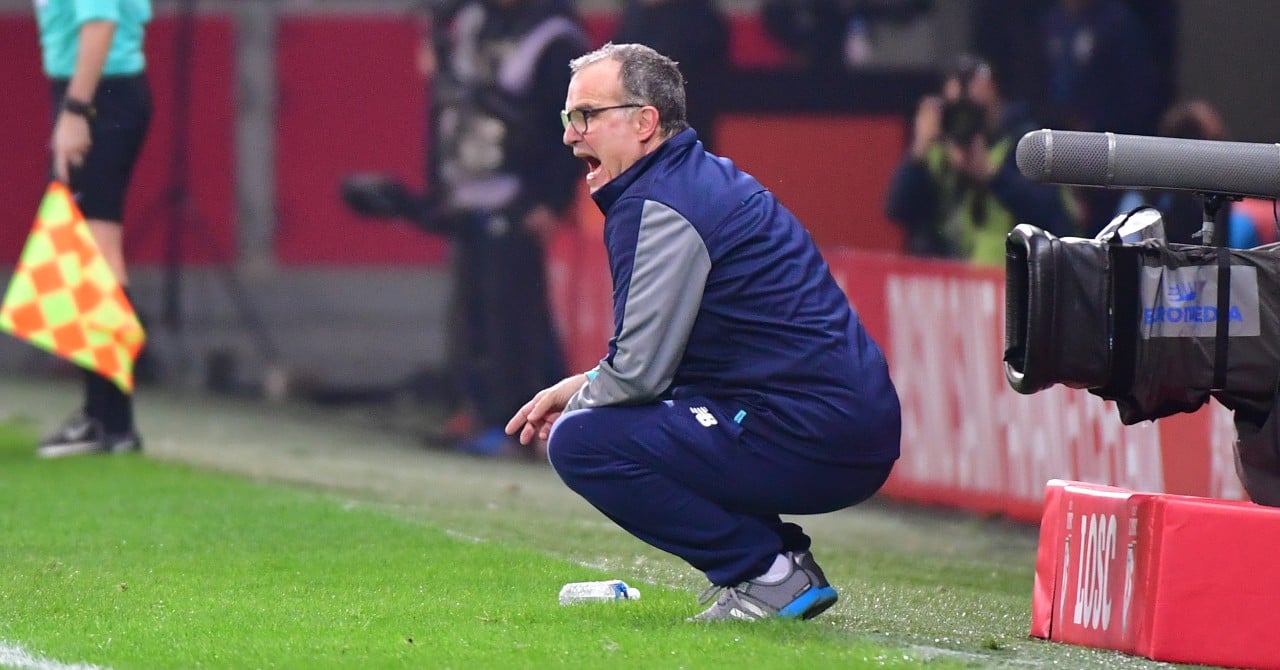
Romain Alessandrini has not kept fond memories of Marcelo Bielsa. The former attacking midfielder, who joined Olympique de Marseille in June 2014, just weeks after the Argentine took charge, delivers a harsh account of life under the orders of “El Loco”.
“Humanly speaking, it was zero. Except with a few players he liked. Many players had individual video sessions. Not me. For those who didn’t play, the week was long,” Alessandrini confides, as cited by L’Équipe.
On the football side, the player nonetheless acknowledges the coach’s genius. “Footballistically, he was impressive. It’s his life. With his staff, it was NASA. His assistants showed us the runs to make on a computer, during training.” But the intensity of the sessions exceeded what he considered reasonable limits. “To excess. The sessions were hell. We were machines.”
These revelations contrast with the idolized image Bielsa left in the Marseille city. During the 2014-2015 season, OM had briefly topped Ligue 1, ahead of Paris Saint-Germain, thanks to an offensive and intense style of play that had won over supporters. But behind the scenes, part of the dressing room struggled with the Argentine coach’s methods.
Bielsa resigned on the opening day of the following season, in August 2015, after a defeat at Caen. Alessandrini himself remained at OM until 2017 before joining LA Galaxy.
Read also
-
 Football ·
Dortmund takes sole lead in Bundesliga as Bayern loses Kane and Olise
-
 Football ·
De Zerbi breaks silence and accuses Benatia and Longoria of sacrificing him
-
 Football ·
Bayern chief warns Musiala sale possible as neurological condition clouds his future
-
 Football ·
Four months after France role, Deschamps returns in Burger King ad
-
 Football ·
Anderson's volley rescues City from fourth straight league defeat as Fulham hold on for draw
-
 Football ·
Caicedo forced off in tears as Chelsea's injury crisis deepens against Leeds