Wolff rejects Williams' sliding-scale budget proposal but sounds alarm on F1 talent drain
Mercedes boss Toto Wolff has dismissed James Vowles's push for a championship-position-based spending allowance as a "red mist" idea, while warning that suppressed F1 salaries are driving elite engineers toward hedge funds and tech firms.
2 min read
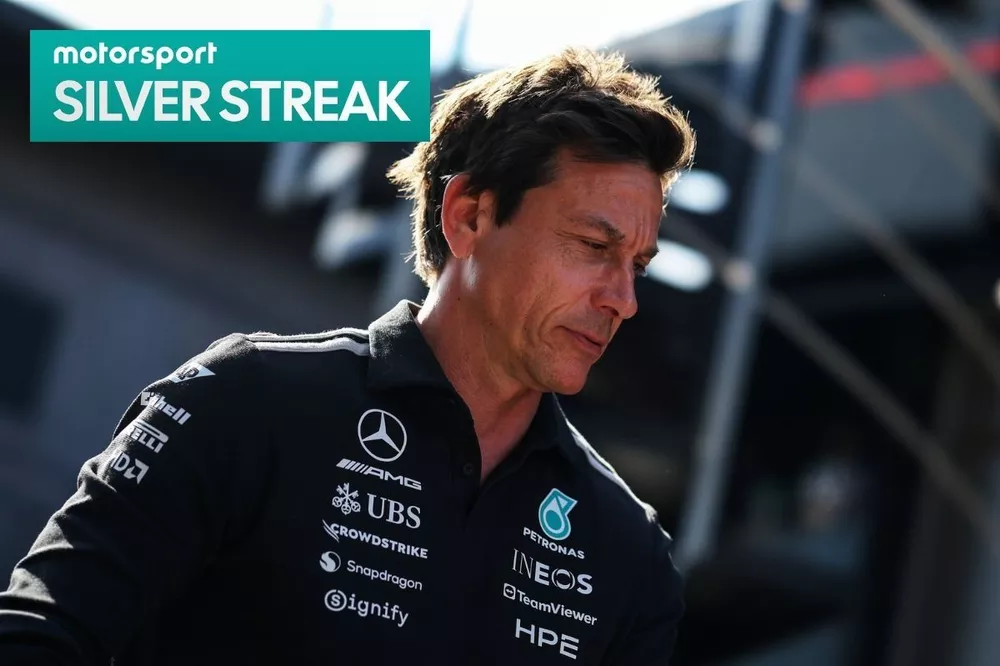
Toto Wolff has flatly rejected a proposal from Williams team principal James Vowles to introduce a sliding-scale budget allowance tied to championship standings, comparing the concept to the divisive Balance of Performance system used in endurance racing — while simultaneously warning that Formula 1’s cost cap is quietly gutting the sport’s engineering talent pool.
Vowles has spent the past month lobbying the F1 paddock for a sweeping overhaul of the sport’s financial regulations, arguing that the newly combined $215 million CapEx/OpEx budget cap has produced a “two-tier championship” in which the top four teams account for 83 percent of all points scored. His proposed fix would allow lower-ranked teams to spend significantly more on rebuilding outdated factory infrastructure without breaching the operational ceiling.
But at Friday’s FIA press conference at the Singapore Grand Prix, Wolff — alongside McLaren’s leadership — made clear he wants no part of it.
“Personally, I don’t like the concept of adjustment based on some positions,” Wolff said. “BoP for me is like a red mist. We’re having these tiny little adjustments on aero time, ATR, which is almost invisible to the spectator and hasn’t been a big thing because it’s really tiny.”
Wolff praised the FIA for keeping politics out of the existing catch-up mechanisms and questioned whether Formula 1 genuinely needs a rule that artificially inflates CapEx spending as a reward for poor on-track results. “Do we really want another mechanism where you’re being allowed to have more CapEx, OpEx based on your championship position? I’m not sure,” he added.
Yet Wolff did not defend the status quo entirely. While opposing the sliding scale for infrastructure spending, he acknowledged that the current budget cap is inflicting serious damage in a different area: the labour market. Because the strict financial framework suppresses team payrolls across the board, Mercedes and its rivals are increasingly losing highly qualified engineers to better-paying industries.
“Now you can get someone into a Formula 1 team today on enthusiasm, but at a certain stage, when after five, six or seven years and you have a PhD, your salaries are still depressed versus a tech company or a hedge fund,” Wolff warned.
The remarks draw a sharp distinction between two separate problems within the same regulatory framework. Vowles’s concern is structural competitiveness — whether smaller teams can ever close the gap to the front when the cap limits how quickly they can modernise their facilities. Wolff’s concern is human capital — whether Formula 1 can retain the engineers who make those facilities worth having in the first place.
With the 2026 technical regulations already locked in and financial rules under active review, the Singapore press conference has sharpened what is becoming one of the paddock’s most consequential debates heading into the next regulatory cycle.
Read also
-
 Formula 1 ·
Hamilton's African Grand Prix dream edges closer as Rwanda secures F1 deal for 2030
-
 Formula 1 ·
Singapore GP qualifying delayed after rain and safety car extend sprint race
-
 Formula 1 ·
Russell crashes out of Singapore sprint lead after passing Verstappen on lap one
-
 Formula 1 ·
Russell starts second as Mercedes split aero packages leave Antonelli seventh in Singapore Sprint qualifying
-
 Formula 1 ·
Stella admits McLaren are back to pre-Baku form after chaotic Singapore sprint shootout
-
 Formula 1 ·
Mercedes left baffled as Russell's old-spec car outpaces upgrade in Singapore