Vasseur warns yellow flag ruling sets dangerous precedent after Russell snatches Austrian GP pole
Ferrari team principal Fred Vasseur says he is "surprised" race control deployed only single yellow flags after Max Verstappen's qualifying crash in Austria, warning the decision will encourage drivers to keep pushing in future incidents. George Russell secured pole despite passing through the yellow zone.
2 min read

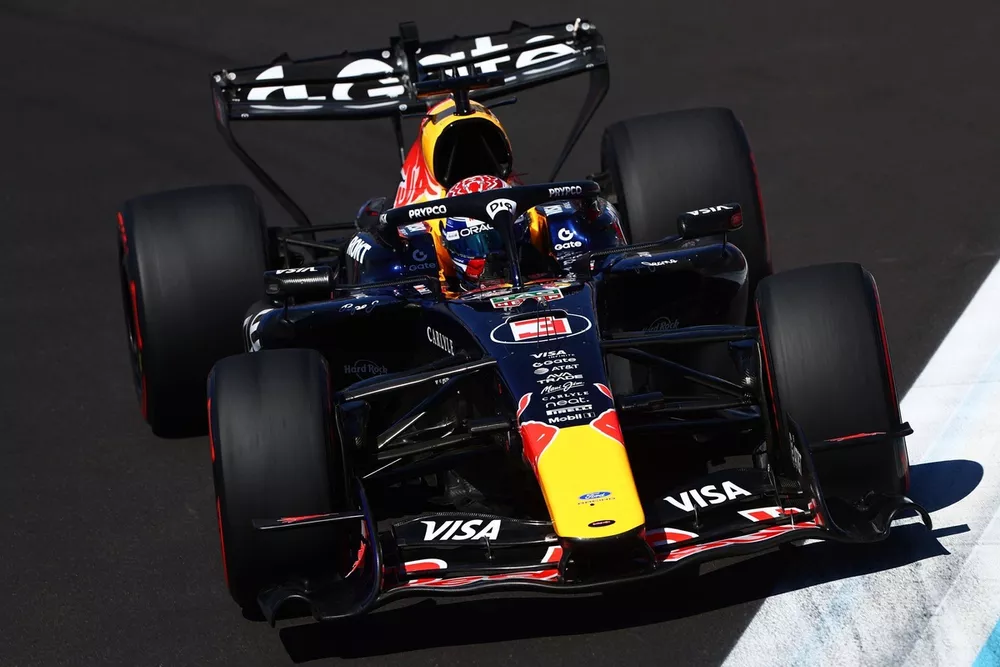
Ferrari team principal Fred Vasseur has warned that race control’s decision to deploy only single yellow flags following Max Verstappen’s qualifying crash at the Austrian Grand Prix sends the wrong message to the rest of the field — and risks creating a dangerous precedent in future sessions.
George Russell claimed pole position at the Red Bull Ring after setting the fastest lap of Q3 in the closing moments, completing his flying lap despite passing through a yellow flag zone at Turn 9, where Verstappen had just lost control of his Red Bull and hit the barriers. Ferrari’s Charles Leclerc and Lewis Hamilton, who had completed their final laps moments before the crash, qualified second and third respectively.
Both Mercedes drivers were still on flying laps when they reached Turn 9 under single yellow conditions. While Kimi Antonelli aborted his lap, Russell lifted briefly before the braking zone, then resumed pushing after Turn 9. The FIA subsequently reviewed the incident and took no further action, satisfied that Russell had slowed sufficiently to comply with the regulations — which require a minimum 5% reduction in speed through the affected mini-sector.
Vasseur made clear he has no grievance with Russell’s performance or the FIA’s judgment on the Mercedes driver’s compliance. “I trust them,” he said. “If you are not able to trust the race control, it’s a disaster. If they took the decision of no further action, it’s because they checked.”
His concern centres on why double yellow flags — which automatically delete any lap times set through the zone under rules introduced in 2022 — were not deployed in the first place. “I’m a bit surprised that they didn’t put double yellow,” Vasseur told Sky Germany. “When you deploy the medical car, you can imagine that you need to have the double yellow.”
Had double yellows been shown immediately, Ferrari could have secured a front-row lockout, as Russell’s lap time would have been deleted. Instead, the Briton takes pole ahead of Leclerc and Hamilton.
For Vasseur, the sporting outcome is secondary to the safety implications of the precedent now set. “I think the negative side of this is that next quali, if you have a crash, everybody will push,” he said.
McLaren team principal Andrea Stella offered a contrasting view, suggesting the existing regulations are functioning as intended, with the 5% minimum slow-down requirement providing a measurable and enforceable standard for drivers navigating yellow flag zones during flying laps.
Read also
-
 Formula 1 ·
F1 Academy champion Doriane Pin targets Mercedes race seat within five years
-
 Formula 1 ·
Bortoleto reveals Alonso is just as sarcastic and straightforward off camera as on it
-
 Formula 1 ·
Szafnauer warns Cadillac's split US-UK base will cost them a world championship
-
 Formula 1 ·
F1 champion Norris completes 38-lap hypercar test at Portimao in McLaren's MCL-HY
-
 Formula 1 ·
Mercedes staff edge Aston Martin 3-1 in annual charity football match as F1 rivals raise funds off-track
-
 Formula 1 ·
Red Bull confirms Verstappen's car degradation problem won't be fully solved until 2027

 Dominica