Tsunoda brushes off Verstappen's claim that 2026 F1 cars diminish driver skill
Yuki Tsunoda has dismissed Max Verstappen's suggestion that his strong recent outings for Racing Bulls prove the 2026 Formula 1 regulations have reduced the importance of driver input, saying his Zandvoort and Monza performances speak for themselves.
2 min read
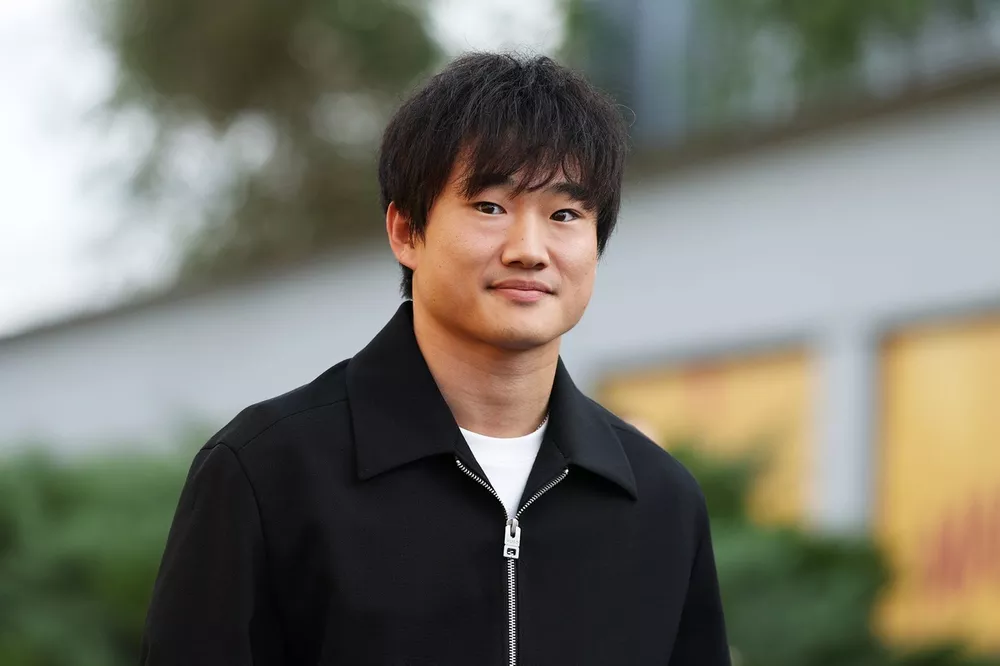
Yuki Tsunoda has pushed back on Max Verstappen’s assertion that the Japanese driver’s improved form this season is evidence that the 2026 Formula 1 regulations have stripped away the driver challenge, insisting his results at Zandvoort and Monza reflect individual quality rather than a levelled playing field.
Tsunooda and Verstappen were team-mates at Red Bull in 2025, but the gap between them was stark: Verstappen finished second in the championship while Tsunoda ended the year 17th, a disparity that cost him his race seat. He was replaced by Isack Hadjar for 2026 and moved into a reserve role, only to be called back into Racing Bulls for the last two rounds after Hadjar sustained a wrist injury over the summer break. Liam Lawson, another driver to have struggled alongside Verstappen in 2025, has stepped in at Red Bull in the interim.
Both stand-ins have performed well. Lawson took seventh in the Netherlands, while Tsunoda scored a point at Monza after narrowly missing out at Zandvoort. It was precisely those results that Verstappen cited when arguing the new energy-management era has blurred the line between strong and average drivers.
Speaking in Madrid ahead of this weekend’s race, Tsunoda was measured in his response. “It’s his comments, so… I don’t know. I really just read it, to be honest. That’s it,” he said. “I’m not really taking anything from his comments and compare to my results, what I showed in two races, it’s a very individual thing, I think. So, I think I’ve done a good job and that’s it.”
He did acknowledge that the 2026 machinery demands a different approach, particularly around energy deployment. “Obviously, energy deployments and stuff is different. It’s obviously part of things that you can’t really push flat out in some corners. Something I experienced in Monza,” he added.
Verstappen has been among the loudest critics of the 2026 ruleset since pre-season, famously describing it as “Formula E on steroids” because of its heavy reliance on energy management. He expanded on that view to the BBC, arguing that the regulations have undermined the traditional rewards of commitment and precision. “In the history of the sport, normally the driver that is the most committed, the latest on the brakes, earlier on throttle, committing in the high-speed [corners], they get rewarded,” he said. “But now you’re constantly thinking about, ‘In this corner I might have to hold in a bit. Go later on throttle. Or brake earlier.‘“n
There have been other moments in 2026 that support his broader point. Lando Norris was effectively guided into overtaking Lewis Hamilton at Suzuka by the car’s energy systems, while McLaren acknowledged the “self-learning elements” of their power unit influenced racing at Spa. Verstappen has used each of those incidents, alongside Tsunoda and Lawson’s returns to form, to build his case that the sport has changed in ways that go beyond normal regulation evolution.
Tsunooda, for his part, appears content to let his lap times do the talking.
Read also
-
 Formula 1 ·
Red Bull's race-start problem will not be fully fixed until 2027, Mekies admits
-
 Formula 1 ·
Antonelli eyes F1 title after ninth win as Verstappen jokes about track limits
-
 Formula 1 ·
Norris admits McLaren has fallen to fourth-fastest team after COTA fifth-place finish
-
 Formula 1 ·
Verstappen calls Red Bull radios 'a disaster' after frustrating third place in Austin
-
 Formula 1 ·
Leclerc senses Ferrari breakthrough after back-to-back podiums in Singapore and Austin
-
 Formula 1 ·
Russell baffled by pace deficit as Antonelli closes in on F1 title after US GP