Record Baltimore crowd of 68,000 signals America is ready for Rugby World Cup 2031
A near sell-out crowd of 68,173 at M&T Bank Stadium — the largest ever for a rugby match in the United States — watched New Zealand face South Africa in the final Rugby's Greatest Rivalry Test, offering World Rugby a promising blueprint five years out from hosting the men's Rugby World Cup.
2 min read
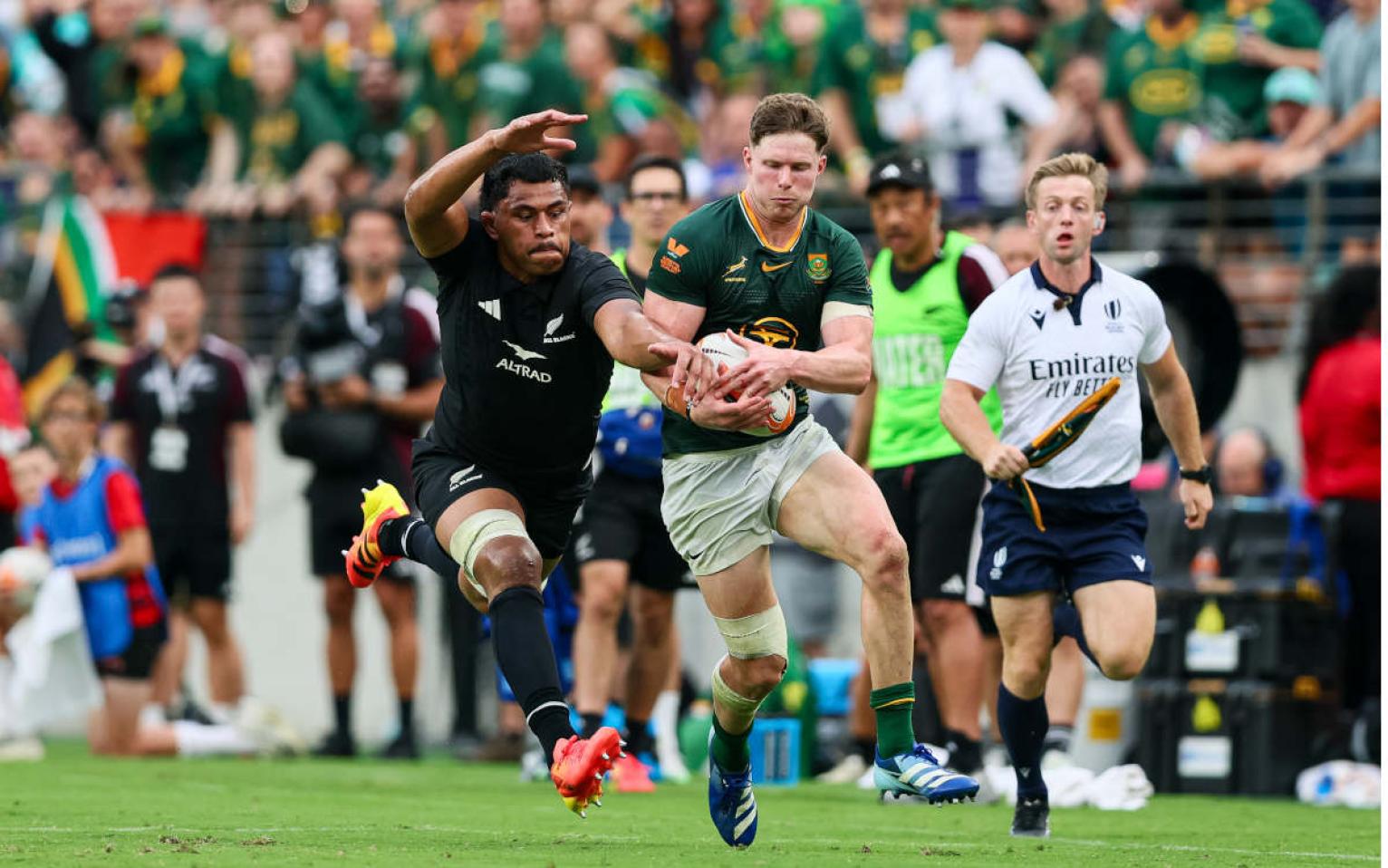
A record crowd of 68,173 packed Baltimore’s M&T Bank Stadium on Saturday for the final Test in Rugby’s Greatest Rivalry series between New Zealand and South Africa, setting a new attendance benchmark for rugby in the United States and providing World Rugby with a tangible sign of the sport’s growing appeal ahead of the 2031 Rugby World Cup.
World Rugby Chair Brett Robinson, speaking to journalists at the venue ahead of kick-off, framed the occasion in explicitly strategic terms. “The USA is at the heart of World Rugby’s new strategic plan,” he said. “Our ambition for 2031 is to ensure that the Rugby World Cup here in the US is the best we’ve ever delivered. Because it’s so important for our game to grow and fuel the sport.”
The match was the latest in a deliberate series of high-profile international fixtures that World Rugby and its most powerful member unions have staged on American soil since the governing body announced the US would host both the 2031 men’s and 2033 women’s Rugby World Cups. England, Scotland, New Zealand, Fiji, Ireland and South Africa have all played matches in the country as part of that push.
New Zealand Rugby CEO Steve Lancaster revealed that tickets were sold to fans in all 50 US states and all seven Canadian provinces, with 40,000 tickets selling out immediately on pre-sale when the Baltimore venue was announced. The near sell-out figure represents a significant leap for a sport still working to establish itself in one of the world’s most competitive sporting markets.
One number, however, illustrated both the progress and the challenge ahead: roughly ten per cent of tickets were sold locally. That figure is comparable to a typical Major League Rugby championship crowd — evidence of a genuine domestic base, but also of how much ground remains to be covered before 2031.
On the streets and in the parking lots of Baltimore in the days before the match, the atmosphere was unmistakably international. A sea of green and gold preceded kick-off, with South African braais and kiwi pies appearing alongside the more familiar trappings of American tailgate culture. Inside the stadium, Springboks and All Blacks colours replaced the Baltimore Ravens’ customary purple.
New Zealand’s ambassador to the United States, Chris Seed, attended a 300-person New Zealand tailgate gathering before watching the match alongside several US Congress members, representatives of the current administration, IndyCar driver Scott Dixon and former All Black Grant Fox. “I thought it was a fantastic occasion,” Seed told RugbyPass.
With five years remaining before the men’s tournament — the third-largest global sporting event behind the FIFA World Cup and the Olympics — World Rugby’s Baltimore experiment offered a credible foundation. The appetite, at least among travelling fans, is clearly there. Converting that into a sustained domestic following will be the defining challenge of the build-up.
Read also
-
 Rugby ·
Canada coach Rouet builds PWR bridges as 25 internationals anchor national team's rise
-
 Rugby ·
Canada can reclaim second in World Rugby rankings by ending England's 39-match winning run
-
 Rugby ·
Finn Russell returns to Bath starting line-up for Glasgow Warriors pre-season test
-
 Rugby ·
Jemima Adams Verling earns Test debut as Ireland name squad for WXV opener against USA
-
 Rugby ·
Canada prop Kassil banned three matches after red card in WXV Global Series opener against Scotland
-
 Rugby ·
Lloyd Williams reverses retirement to re-sign with Worcester four months after hanging up his boots