Mercedes' late-freeze gamble explains its W17 dominance and mid-season leapfrog swings
Technical director James Allison has revealed Mercedes pushed its W17 design freeze later than ever before, compressing manufacturing time to pack maximum aerodynamic development into the launch car — a strategy he says is finding lap time at six to seven times last season's rate.
2 min read
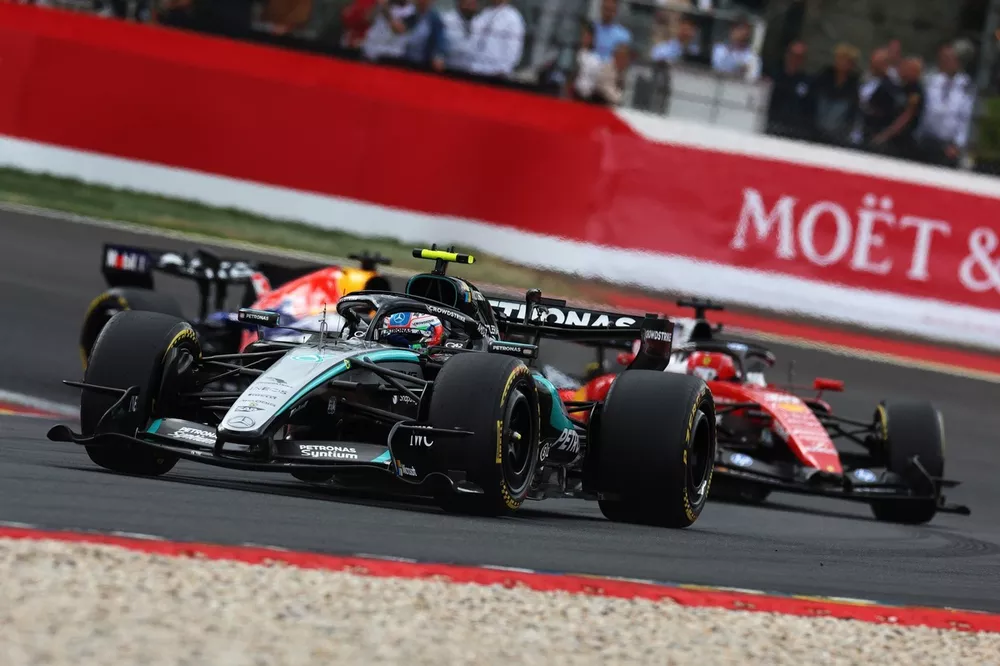
Mercedes technical director James Allison has explained why the W17 arrived at the 2026 season opener as the fastest car on the grid — and why rivals have been able to leapfrog it with mid-season updates ever since. Speaking on the team’s Nu Silver Arrows Radio Show podcast, Allison described a deliberate decision to push the car’s design freeze later than Mercedes had ever attempted, compressing manufacturing time to near-zero contingency in order to bake early-season aerodynamic gains directly into the launch specification.
The W17 has delivered eight wins from the opening 11 races of Formula 1’s new-regulations era, beginning with a 1-2 finish in Australia. Yet Ferrari and McLaren have both beaten Mercedes to victories on merit at various points in 2026, a pattern Allison attributes directly to the team’s unconventional development timeline.
“We took a decision internally on the aerodynamic side and on the bodywork side of the car that we were going to leave it later than we’ve ever left a car before, by several weeks,” Allison said. “And that we were going to do a plan that had less than no contingency in it.”
The consequence, he explained, is that Mercedes finds itself “out of phase” with the rest of the field. Because the team front-loaded so much development into the launch car, rivals who followed a more conventional freeze schedule arrived with less performance at the first race but retained a larger package of updates to deploy through the year. When those updates land, they produce a temporary leapfrog effect — before Mercedes’ own ongoing development cycle reasserts itself.
Allison underlined just how steep that development curve has become under the new ruleset. “Aerodynamically, the gain rate for each passing week in the wind tunnel — the amount of lap time we find — is about six to seven times what it was last year,” he said. “It’s about half a second every two months, something like that, so that’s really, really steep.”
That figure reflects the fundamental difference between developing a brand-new set of regulations, where aerodynamic concepts are still being explored and refined, versus extracting the final tenths from a mature, end-of-life car. Under the previous rules, diminishing returns had compressed the performance gaps between teams; the 2026 reset has reopened the development gradient dramatically.
Mercedes remains the firm favourite for both championships, but Allison’s candid account of the team’s risk-laden strategy offers a clearer picture of why the title fight has not been straightforward despite the W17’s overall superiority.
Read also
-
 Formula 1 ·
Hamilton escapes ban but Ferrari fined €10,000 after Bortoleto impeding scare in Bahrain GP practice
-
 Formula 1 ·
Russell admits Mercedes is 'off the pace' after difficult Friday practice at Sepang
-
 Formula 1 ·
Brundle dismisses Horner-to-Ferrari rumours after speaking directly with the Briton
-
 Formula 1 ·
Verstappen skips soft tyres in Malaysia FP2 and urges caution over Red Bull's progress
-
 Formula 1 ·
Briatore draws line under Colapinto's Baku crash as Alpine chase Racing Bulls
-
 Formula 1 ·
Hadjar returns from wrist fracture with podium, contract and a joke about his couch

 Colombia