Legal complaint targets Uefa's exclusive deal with elite clubs over competition law breaches
The Union of European Clubs has filed a complaint with the European Commission alleging that Uefa's exclusive agreement with the European Football Clubs lobbying group breaches EU competition law, concentrating power over the sport in the hands of a select group of wealthy clubs.
2 min read
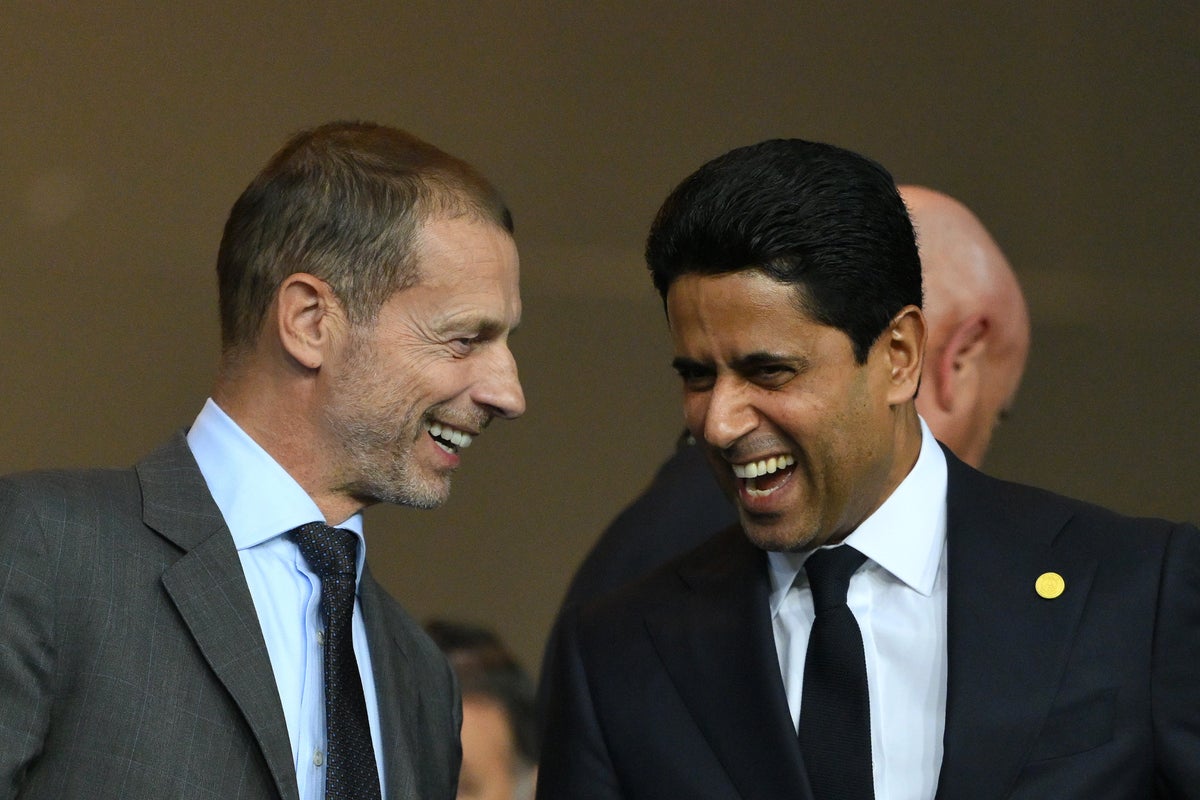
The Union of European Clubs (UEC) has submitted a formal legal complaint to the European Commission, alleging that Uefa’s exclusive agreement with European Football Clubs (EFC) — the lobbying body representing the continent’s most powerful clubs — violates EU competition law through anti-competitive agreements and abuse of dominance.
The complaint centres on a memorandum of understanding between Uefa and the EFC that designates the latter as the sole club body with which Uefa will engage, with the arrangement now extended until 2033. The terms of the agreement have never been made public. The UEC, which represents a broader base of clubs that feel excluded from decision-making, argues the deal concentrates influence over European football in the hands of a select group of clubs and, by extension, their owners.
The structural implications are significant. Uefa’s Club Competitions Committee, which reviews every change to format, access and prize money across European competitions, has 20 members — 16 of whom are nominated by the EFC. Critics argue this arrangement has helped approximately 50 clubs dominate four out of every five Champions League places since 2000, securing repeated access to transformative prize money. One commissioned study found that major English clubs received €110 million in Uefa prize money in a single season — equivalent to roughly half the entire annual revenue of clubs such as Fulham, Crystal Palace and Everton.
The complaint invokes Articles 101 and 102 of the EU Treaty, which cover anti-competitive agreements and abuse of a dominant market position. The UEC also argues the arrangement contradicts the landmark 2023 Super League ruling by the EU Court of Justice, which found that Uefa holds a dominant position — “or even a monopoly” — over international club competitions, and that its control over access must follow transparent, objective and non-discriminatory rules.
The EFC, formerly known as the European Club Association (ECA), has grown considerably in recent years. It is now planning a global expansion and is increasingly regarded as a third major power in world football alongside Fifa and Uefa. That expansion has drawn further scrutiny, particularly given the EFC’s potential role in the ongoing Gianni Infantino crisis: the future of Fifa’s Club World Cup may hinge on its own memorandum of understanding with the EFC.
The close personal relationship between Uefa president Aleksander Ceferin and EFC chair Nasser Al Khelaifi has also come under renewed examination as the complaint gains attention. The revenue disparity the complaint seeks to address is already a live issue in English football, where a £300 million gap between the wealthiest Premier League clubs and the rest has become a flashpoint in ongoing debates about financial regulation.
Read also
-
 Football ·
Ould Hocine snatches victory for Paris FC against Koge in extra time
-
 Football ·
Drone operator films Pochettino's first Manchester United training session from unrestricted airspace
-
 Football ·
Torres reveals how Alonso and Mascherano exits forced his £50m Chelsea move
-
 Football ·
Monaco extends Paris Brunner's contract by two years following breakthrough start to season
-
 Football ·
England fined and handed suspended ticket ban after anti-Catholic chanting in Madrid
-
 Football ·
Man City and Forest outvoted 18-2 as Premier League shields board from Etihad lawsuit threat
 Belgium U17
