Horner reveals Red Bull's split leadership cost them Norris, Russell, and Piastri
Christian Horner has admitted that Red Bull's divided management structure left him powerless to sign Lando Norris, George Russell, and Oscar Piastri, even after his own simulator engineers flagged all three as superior to the team's funded juniors.
2 min read
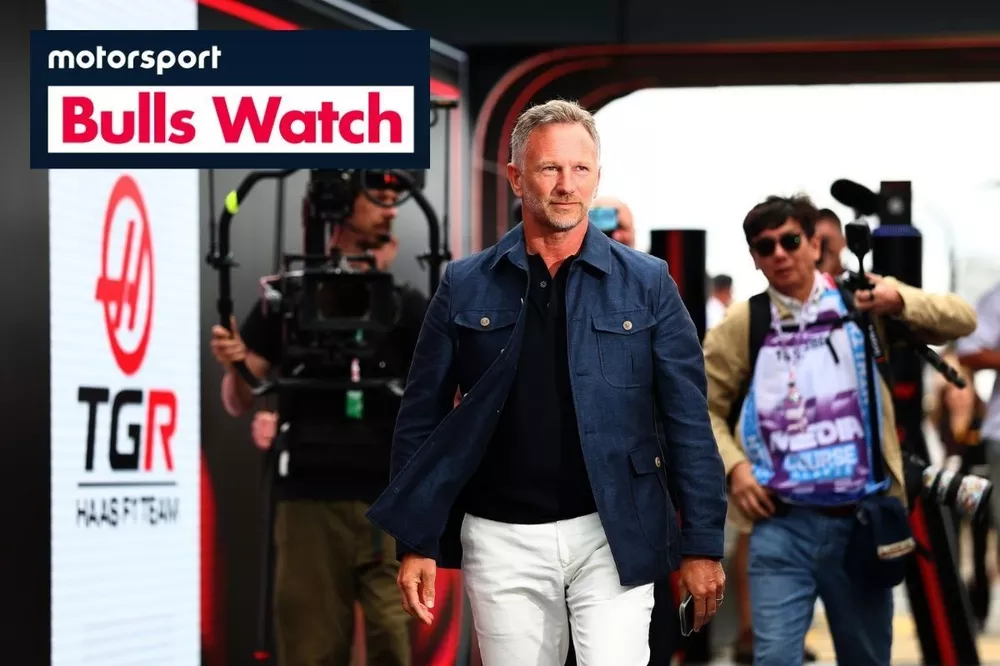
Christian Horner has revealed that Red Bull’s fractured leadership structure prevented him from signing Lando Norris, George Russell, and Oscar Piastri during their teenage years, despite simulator data clearly identifying all three as exceptional talents.
Speaking on the High Performance podcast, Horner explained that as team principal he held no authority over the Red Bull Junior Team, which was controlled entirely by motorsport advisor Dr. Helmut Marko. That division of power, he argued, is the primary reason three of Formula 1’s current leading drivers ended up at rival constructors.
“I never had responsibility for the young driver programme,” Horner stated plainly.
The admission is made more striking by the circumstances Horner described. The fathers of Norris, Russell, and Piastri were paying Red Bull to use the factory’s professional simulator as independent customers — writing cheques for simulator time while the team’s own funded juniors occupied the official programme slots.
“George Russell was paying us to go on our simulator, as were Lando Norris and Oscar Piastri,” Horner explained. “Their dads were writing cheques for them to run on the driver simulator that we had.”
The telemetry quickly made the talent gap impossible to ignore. Horner recalled his simulator engineers delivering a blunt verdict: “Christian, these kids are better than the juniors we’ve got at the moment.”
Armed with that data, Horner took the findings directly to Marko, who held absolute veto power over the driver pipeline. “I remember taking them to Helmut and going, ‘Look, I really think you should look at these guys,’” Horner said. Marko declined to act on the recommendation, and all three drivers eventually signed with rival teams — Norris and Piastri with McLaren, Russell with Mercedes.
The revelation reframes one of the more consequential scouting oversights in recent Formula 1 history. Red Bull’s junior system has long been credited with producing Max Verstappen and a succession of race-ready talents, but Horner’s account suggests the same structure that enabled those successes also created blind spots that competitors were able to exploit.
Norris finished runner-up in the 2024 Drivers’ Championship, Piastri won multiple races for McLaren that same season, and Russell has established himself as a race winner at Mercedes — making the collective miss one of the more expensive talent-identification failures in the sport’s recent memory.
Read also
-
 Formula 1 ·
Mercedes seal 2026 constructors' title as Ferrari's 'rubbish race' ends all pressure in São Paulo
-
 Formula 1 ·
Istanbul Park's iconic layout stays intact as Turkey overhauls F1 return
-
Formula 1 ·
Allison admits flawed Update 18 made championship-winning W17 a late-season handful
-
 Formula 1 ·
Piastri admits McLaren's 2026 car must be 'manhandled' to unlock its speed
-
 Formula 1 ·
Topps marks Hamilton's 400th F1 start with limited trading card after São Paulo penalty nightmare
-
Formula 1 ·
Mercedes' Allison warns F1 teams will claw back every point of FIA's 2027 downforce cuts
 Poland U18
