Hamilton backs V8 return and slams 2026 power units for dying on straights
Lewis Hamilton used Las Vegas Grand Prix media day to endorse the FIA's proposed V8 comeback while criticising 2026 power units for losing electrical punch mid-straight. Manufacturers are set to meet in Las Vegas and Qatar before a unified proposal goes to the FIA World Motor Sport Council on 10 December.
2 min read
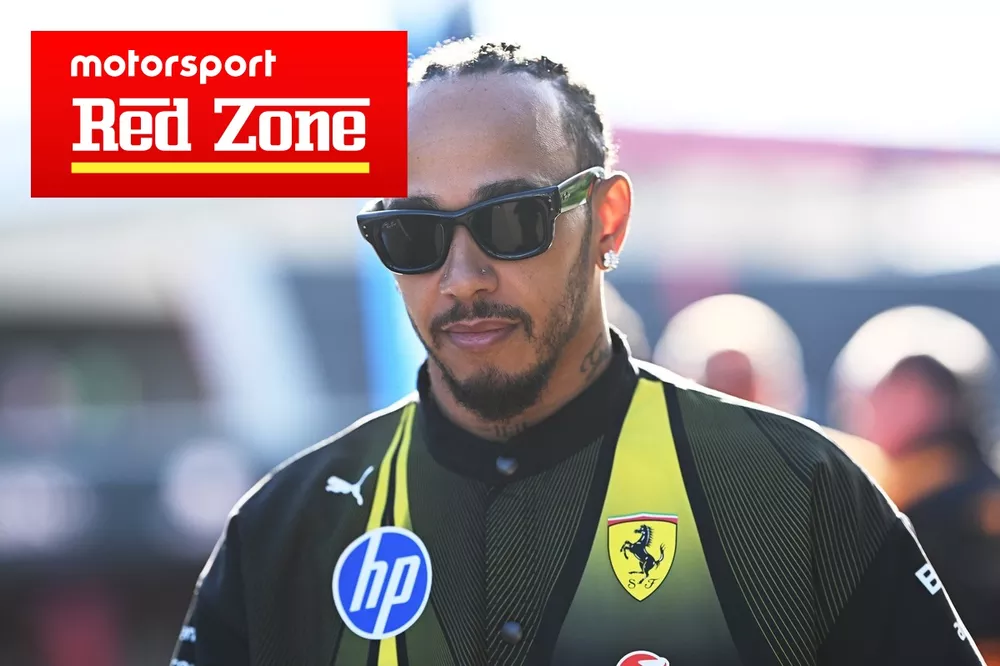
Lewis Hamilton has thrown his support behind Formula 1’s proposed return to V8 engines while taking aim at the 2026 power units, accusing them of “dying halfway down the straight” — a problem he warned would be painfully visible on Las Vegas’s 1.9-kilometre Strip straight.
Speaking on Las Vegas Grand Prix media day, the seven-time world champion was responding to an FIA President Mohammed Ben Sulayem Instagram post that set the paddock talking. Ben Sulayem published a teaser featuring V8 audio and the caption “You spoke, we listened. V8s coming soon,” while official FIA channels briefly published and then deleted graphics referencing an agreement in principle for a 2030 introduction, following a meeting between the governing body, Formula One Management, and engine manufacturers.
“It depends on how they design it, regulation-wise, and going back to the good sound, because that’s, I think, been lacking since we’ve been in the V6 era,” Hamilton said. “Yeah, bring back the small exhaust and get that sound back, but you could have that, and as long as we don’t have the engine dying halfway down the straight, then I think that’d be better.”
Hamilton’s criticism targets the central flaw in the 2026 regulations. The incoming power units lean heavily on a 350kW MGU-K, meaning drivers frequently exhaust their electrical deployment before reaching braking zones — a limitation that will be amplified on the long Las Vegas straight.
Any V8 that does return would differ significantly from the naturally aspirated 2.4-litre units Hamilton raced when he debuted in 2007 and claimed his first championship in 2008. The framework under discussion centres on a 2.1-litre turbocharged V8 running on sustainable fuels, paired with a much smaller 100kW hybrid motor designed to reduce costs and cut power unit weight.
Nothing has been formally agreed. Manufacturers — Mercedes, Ferrari, Red Bull Ford, Honda, Audi, and Cadillac — are scheduled to meet in Las Vegas on Friday and again in Qatar to align on a unified proposal before presenting it to the FIA World Motor Sport Council in Shanghai on 10 December. Because the current engine cycle runs through 2030, a 2030 launch would require shortening the existing regulations by a year rather than waiting until 2031.
Read also
-
 Formula 1 ·
FIA to phase in 12-15 full-time F1 stewards from 2027 to end consistency debate
-
 Formula 1 ·
Piastri confirms no new manager yet after seven-year Webber split
-
 Formula 1 ·
Hamilton reveals F1 life feels 'isolating and lonely' despite his own Las Vegas grandstand
-
 Formula 1 ·
Hamilton insists Ferrari trust is intact despite repeated strategy overrules
-
Formula 1 ·
Hamilton dismisses Ferrari trust fears despite two costly strategy overrules
-
 Formula 1 ·
Norris warns millions in staff bonuses ride on McLaren's fight to overhaul Red Bull for third

 Cuba U17
