FIFA's lightning rule explained as storms threaten England vs Mexico in World Cup last 16
Forecast thunderstorms over Mexico City have raised the prospect of significant delays to England's World Cup round-of-16 clash on Sunday. FIFA rules require an immediate pause in play if lightning is detected within eight miles of the stadium, with a minimum 30-minute delay that resets with every new strike.
2 min read
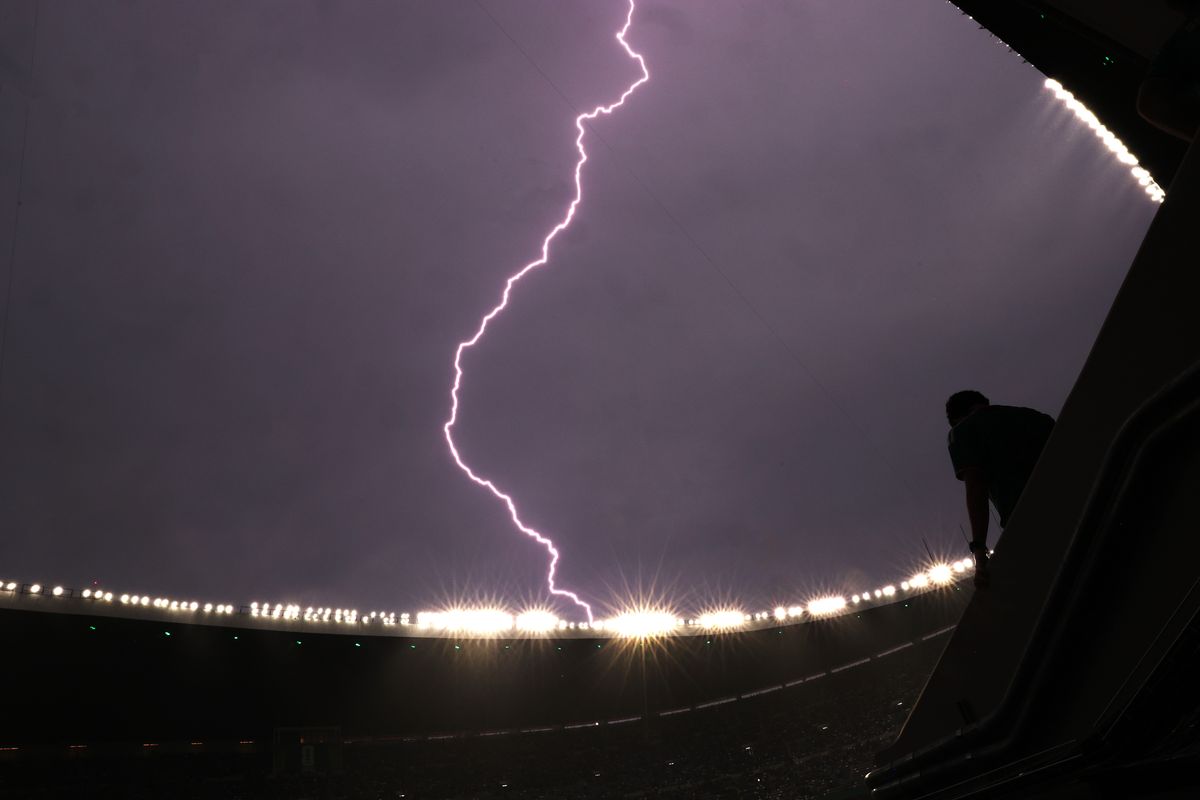
Thunderstorms threatening Mexico City on Sunday have put FIFA’s severe-weather protocols in the spotlight ahead of England’s World Cup round-of-16 match against Mexico at Mexico City Stadium, with kick-off scheduled for 6:00 p.m. local time (1:00 a.m. UK).
Officials had considered moving the fixture forward by six hours to avoid the worst of the forecast conditions, but that proposal was dropped after discussions with both the Mexican and English football associations. FIFA’s meteorological teams remain on standby, however, and are prepared to trigger delay procedures if lightning develops during the game.
Under FIFA’s current World Cup regulations, play must stop immediately if lightning is detected within an eight-mile radius of the host stadium. The mandatory safety delay lasts a minimum of 30 minutes and resets entirely with each subsequent strike — meaning a persistent storm could push the total interruption well beyond that baseline.
Rather than cancelling a match outright, tournament officials prefer to wait out passing storms with no fixed maximum delay. Once conditions clear and the pitch is declared safe, the game resumes from the exact point of interruption, following a warm-up period for both sets of players.
For England supporters watching from home, a match already set to finish around 3:00 a.m. UK time — assuming no extra time — could run considerably later if storms materialise.
The scenario is not without precedent at this tournament. France’s group-stage match against Iran was delayed by more than two hours due to weather, while Mexico’s earlier fixture against Ecuador saw its kick-off pushed back by an hour. In both cases, play eventually resumed without the match being relocated or abandoned.
When extreme weather strikes, stadiums use large video screens to issue shelter-in-place instructions to crowds. Local meteorologists and emergency authorities work alongside FIFA officials to determine when it is safe to restart.
FIFA’s World Cup 2026 regulations also give the governing body the right to “cancel, reschedule or relocate” any match “at its sole discretion”, though that option is treated as a last resort.
Read also
-
 Football ·
Hojlund shoves Portugal coach Jesus and salutes Ronaldo in Denmark's 4-2 Nations League defeat
-
 Football ·
FA warns of action after Manchester City found guilty of Premier League financial breaches
-
 Football ·
FA vows to act 'where appropriate' after Manchester City found guilty of financial breaches
-
 Football ·
FA vow to 'take action where appropriate' after Manchester City found guilty of all financial rule breaches
-
 Football ·
Portuguese media deliver damning Ronaldo verdict as Portugal thrive without him
-
 Football ·
FFF relaunches France Hall of Fame after criteria criticism

 Congo DR