FIA closes Red Bull's sidepod loophole with tighter 2027 technical regulations
The FIA is amending its 2027 technical regulations to eliminate a floor support trick Red Bull introduced on the RB22 at the Austrian Grand Prix, reducing the permitted stay dimension from 20mm to just 5mm and forcing both Red Bull and Audi to redesign their sidepod geometry.
2 min read
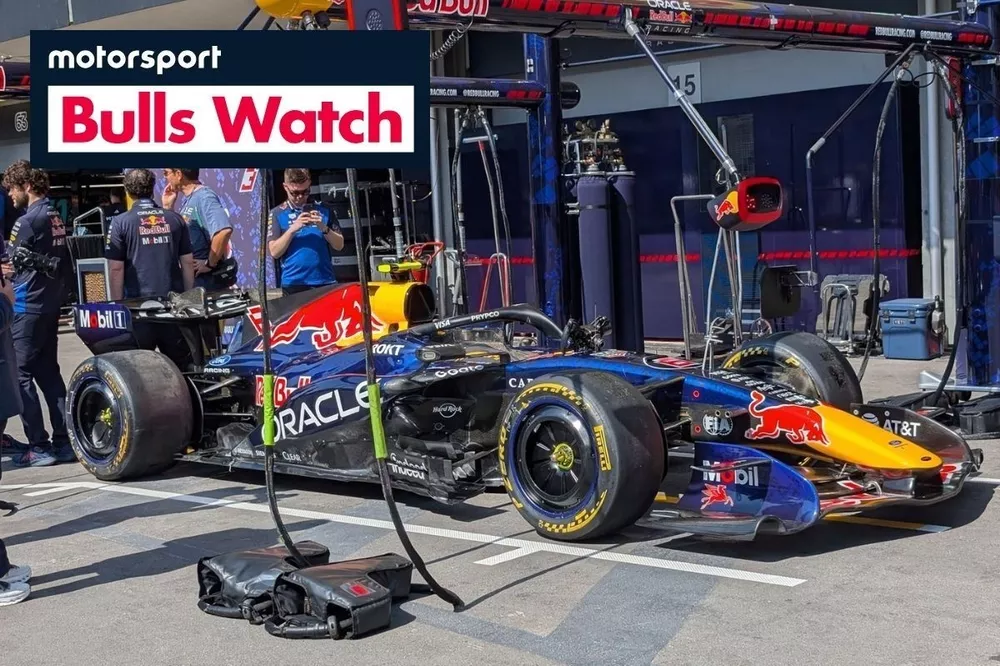
The FIA is set to close a sidepod aerodynamic loophole exploited by Red Bull Racing this season, with amended 2027 technical regulations that will reduce a key floor support dimension from 20mm to just 5mm — effectively banning the configuration entirely. The change, first reported by Rosario Giuliana at AutoRacer.it, means both Red Bull and Audi will need to redesign their lower sidepod geometry before next year’s campaign.
The trick centred on the lower sidepod ridge, where aerodynamicists typically want knife-sharp edges to cut through airflow and direct it cleanly toward the floor. FIA regulations mandate a large minimum radius on those surfaces to prevent exactly that kind of aggressive geometry — but Red Bull found a carve-out in the wording relating to a “floor body stay”.
By fitting a structural cable along the lower sidepod ridge, Red Bull’s designers were able to exploit a clause that permits bodywork sitting directly adjacent to a support stay to carry a smaller 20mm radius. The result was a significantly sharper, more aggressive undercut than rivals running standard bodywork — a meaningful aerodynamic advantage that first appeared on the RB22 at the Austrian Grand Prix.
The solution was detailed publicly by respected F1 technical analyst Craig Scarborough around the time of the British Grand Prix, and it attracted immediate attention across the paddock. Audi moved quickly enough to copy the concept on their own car in Baku, confirming the performance value of the design.
The FIA’s response is to amend the 2027 regulations so that the permitted floor support dimension drops to 5mm — a reduction that closes the gap Red Bull had exploited and removes any practical benefit from the approach. Both teams will now have to return to conventional sidepod architecture for the new season.
The episode is a familiar one in Formula 1, where technical regulations are written in precise but finite language and engineering teams routinely find interpretations that sit within the letter of the rules while pushing well beyond their spirit. The FIA’s standard remedy — tightening the specific clause for the following season — keeps the current car legal while ensuring the advantage cannot carry forward.
Read also
-
 Formula 1 ·
F1 champion Norris takes stake in £500m hospitality firm through athletes' venture fund
-
 Formula 1 ·
Verstappen makes GT3 debut at Portimao as Rossi shares the grid in GTWCE finale
-
 Formula 1 ·
Bottas forced to lift and coast on lap two as Cadillac's brake woes persist in Singapore
-
 Formula 1 ·
Kardashian revives 'Towel-Gate' with Antonelli on Singapore red carpet
-
 Formula 1 ·
Horner rules out Ferrari move and demands ownership stake before any F1 return
-
 Formula 1 ·
Bradley Cooper transforms Port of Nice into 1960s F1 street circuit for Ocean's prequel

 Panama W