F1's 2030 V8 rules to cap engine supply at two teams, leaving Mercedes with three customers to cut
Formula 1 plans to limit each manufacturer to supplying just two teams under its 2030 V8 regulations, Autosport has learned. The rule would force Mercedes to drop two of its three current customers — McLaren, Williams, and Alpine — triggering a scramble for alternative engine deals.
2 min read
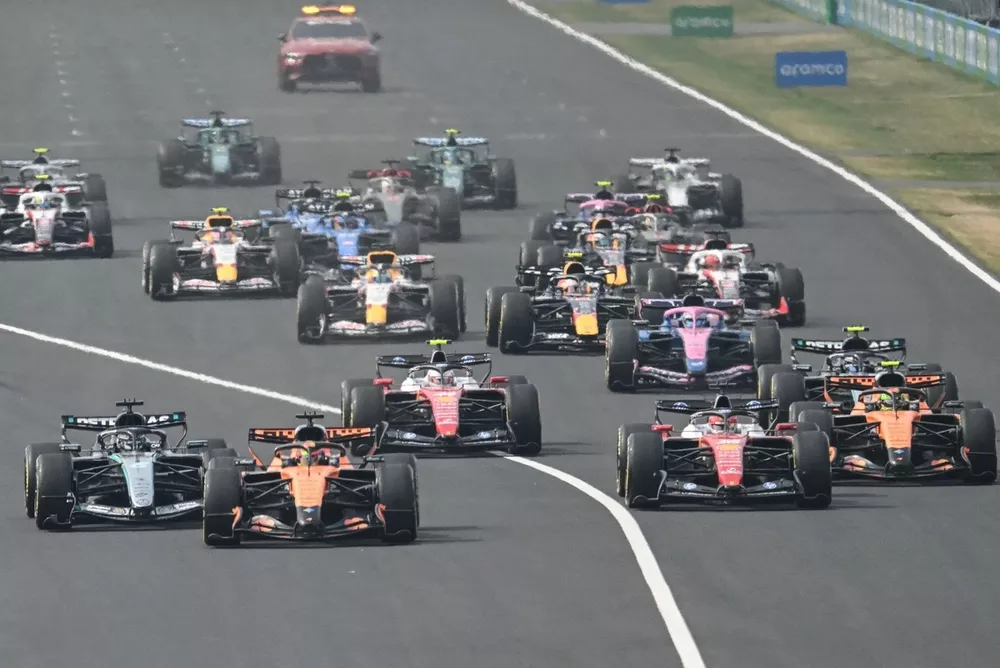
Formula 1 is set to restrict each power unit manufacturer to supplying a maximum of two teams under its incoming 2030 regulations, a move that would force Mercedes to shed two of its three current customers and reshape the grid’s engine landscape.
The FIA announced during the Las Vegas Grand Prix weekend that there was unanimous support to bring the next generation of power unit regulations forward to 2030. The new framework centres on 2.1-litre turbocharged V8 engines, a maximum of 200 kilowatts of electric power, and the mandatory use of sustainable fuels — a package designed to reduce cost and complexity while preserving the acoustic character that suits F1’s growing roster of urban street circuits.
What was not included in the public announcement, but formed part of a wider FIA framework document, is an agreement among the six confirmed 2030 manufacturers to supply no more than two teams each, including their own works operation. That leaves just one external customer slot per manufacturer.
The stated aim, according to sources familiar with the discussions, is to reduce the political influence that comes with a manufacturer powering a large share of the grid — a dynamic currently embodied by both Mercedes and Ferrari. Manufacturers are also said to have been willing to downsize voluntarily, given that supplying F1 engines is a loss-making operation with costs capped at $18 million per season.
For most manufacturers, the arithmetic resolves itself cleanly. Ferrari currently supplies Haas alongside its works team, while Cadillac — its third customer — will switch to in-house power from 2030. Red Bull Powertrains covers Red Bull Racing and Racing Bulls. Audi, Honda (as Aston Martin’s partner) and General Motors through Cadillac are each expected to have a single works team as their sole confirmed customer.
Mercedes presents the most complicated picture. The Brixworth operation currently supplies McLaren, Williams, and Alpine in addition to its own Brackley-based works team. Under the proposed framework, two of those three would need to find alternative arrangements once the FIA World Motor Sport Council formally approves the proposal at its meeting in Shanghai next month.
Alpine’s position is already precarious after parent company Renault recently sold off its in-house engine programme, leaving the French outfit without a long-term supply solution of its own. McLaren and Williams, meanwhile, have benefited more than most from Mercedes’ dominance of the hybrid era since 2014, making the prospect of losing that supply particularly consequential.
The approval of the framework in Shanghai would trigger what is expected to be an extended period of negotiation and political manoeuvring in the paddock as teams seek to lock in the most competitive available supply — or come to terms with less proven alternatives.
Read also
-
 Formula 1 ·
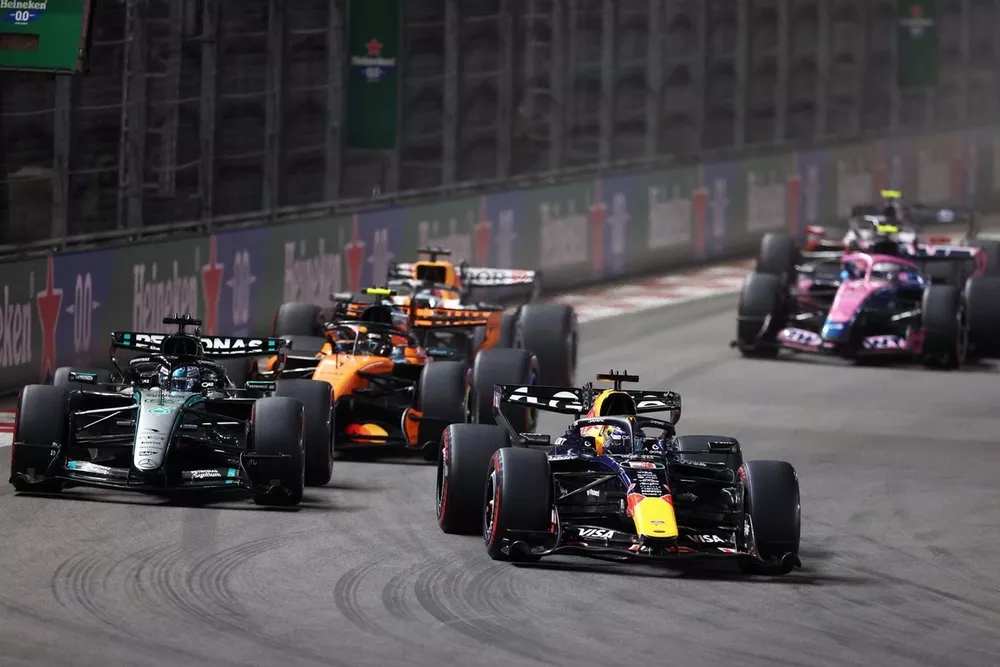
F1's 2030 V8 plan limits manufacturers to two teams, leaving three Mercedes customers in limbo
-
 Formula 1 ·
Haas sacrifices Camara's F2 title lead to keep him in F1 for Qatar and Abu Dhabi
-
 Formula 1 ·
Stella compares Piastri to Schumacher and Alonso after podium charge from 17th in Las Vegas
-
 Formula 1 ·
Hamilton blames Leclerc's 'frame of mind' after Las Vegas collision costs Ferrari points
-
 Formula 1 ·
Verstappen dismisses Russell as a 'complete disaster' after Las Vegas Grand Prix win
-
 Formula 1 ·
Hadjar handed 10-second penalty for backing up Russell under safety car in Las Vegas GP

 Tajikistan U17
