CSAC chief moves to ban oblique kicks from MMA after UFC 331 controversy
California State Athletic Commission executive director Andy Foster has opened discussions on banning lateral knee kicks following a complaint at UFC 331, where Edmen Shahbazyan protested a legal technique he did not know was permitted.
2 min read
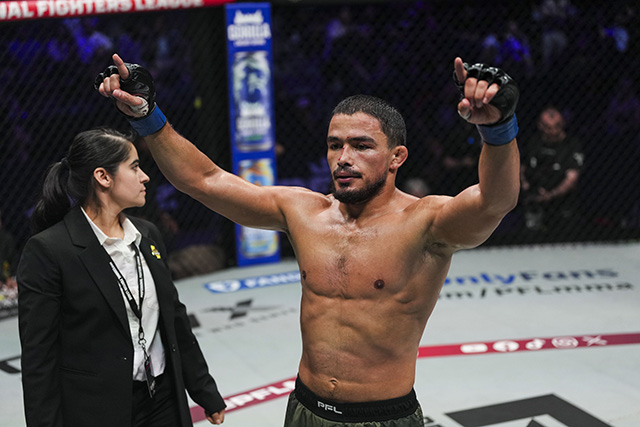
California State Athletic Commission executive director Andy Foster has signalled he wants to ban oblique kicks in MMA, raising the prospect of a significant rule change to the unified rules after the technique drew complaints at UFC 331 in Los Angeles on 19 September.
The issue surfaced during a CSAC debrief following the event at Crypto.com Arena, where middleweight Edmen Shahbazyan complained to the referee about Brunno Ferreira throwing side-kicks to the knee during their bout. Shahbazyan appeared unaware the technique was legal — he went on to win a unanimous decision — but the incident prompted Foster to put the move on the agenda for formal review.
Oblique kicks, also known as lateral knee kicks, target the side of the knee joint and can cause serious ligament damage at certain angles. Although widely banned in gyms and regarded as a cheap shot in sparring, the technique remains perfectly legal in professional MMA. Critics have long argued it carries an injury risk disproportionate to its sporting value; supporters counter that it is a legitimate range-control tool.
MMA reporter Aaron Bronsteter, who attended the CSAC debrief, relayed Foster’s position on X: “Foster also wants to discuss making lateral knee kicks a foul and also wants to hold discussions with medical professionals and determine whether a specific peptide that heals cuts and are not performance-enhancing be made legal.”
The potential legalisation of that cut-healing peptide represents a separate but notable proposal. Foster indicated he would consult medical professionals before any decision, with the substance’s non-performance-enhancing status central to the argument for permitting it.
Foster also raised a broader restructuring of how fouls are classified. Under the current unified rules, fouls are judged as either intentional or unintentional. Foster wants to replace that binary with a three-tier system — incidental, reckless, or malicious — a change he believes would reduce eye pokes by incentivising fighters to keep their hands closed.
“Foster also discussed a potential rule change in the unified rules that would classify fouls as being incidental, reckless or malicious rather than unintentional and intentional,” Bronsteter wrote. “He believes that will make fighters keep their hands closed and reduce eye pokes.”
None of the proposals have been formally adopted. Any changes to the unified rules would require broader consultation across athletic commissions before taking effect.
Read also
-
MMA ·
UFC middleweight champion Strickland calls for boxing move under Zuffa banner
-
MMA ·
Steveson's manager invokes GSP and Makhachev after shock 12-second UFC KO
-
MMA ·
Volkanovski visibly heartbroken as teammate Ruffy is stopped by Tsarukyan at UFC 331
-
MMA ·
Joshua Van defends UFC flyweight title against Pantoja despite torn AC joint in camp
-
MMA ·
Sleeping on a mat three weeks before his UFC 331 knockout, Sharaf's story stuns the sport
-
MMA ·
Baraniewski vows to return stronger after Menifield ends unbeaten UFC run
 Fiji
Fiji